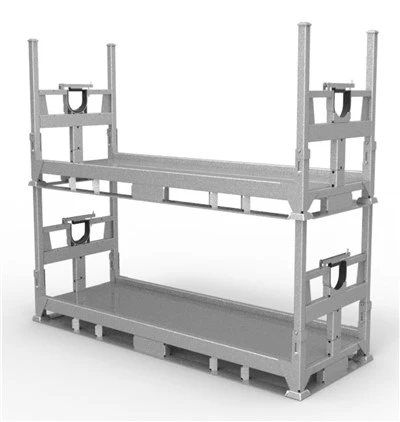
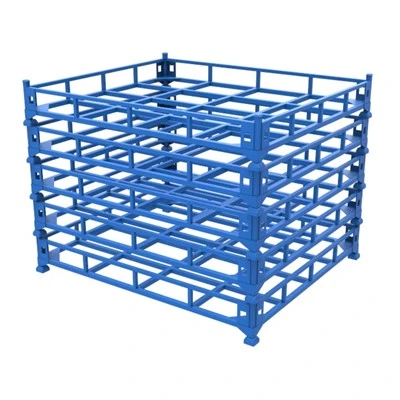
First, ensure the warehouse cages are securely fixed and tied. When loading, use ropes or other suitable tools to firmly secure the cages to the transport vehicle to prevent them from shaking, colliding, or shifting during transport. This is especially important for long-distance transport to ensure stability and prevent damage to the cages or spillage of goods due to vehicle bumps.
Second, pay attention to the stacking method of the warehouse cages. If transporting multiple cages together, arrange the stacking order reasonably, following the principle of bottom-level load-bearing capacity, to avoid crushing lower cages with excessive weight from upper cages. Stacking should be neat and orderly, with adjacent cages tightly packed together to minimize space for collisions.
Third, pay attention to road conditions. Understand the road conditions of the transport route in advance and avoid sections with potholes or severe bumps. In areas with poor road conditions, reduce speed and drive cautiously to reduce the impact force on the warehouse cages.
Furthermore, take protective measures. Use cushioning materials such as foam boards or rubber mats around the warehouse cages to reduce potential collision damage. Meanwhile, for fragile, easily damaged, or specially required goods, additional protection should be taken, such as individual packaging and adding shock-absorbing devices.
Next, check the integrity of the warehouse cages. Before transportation, carefully inspect the warehouse cages for damage, such as whether the welds are secure and whether the mesh is torn. Any problematic warehouse cages should be repaired or replaced promptly to prevent the problem from escalating during transportation.