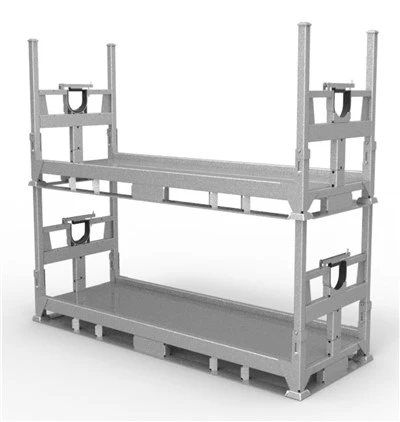
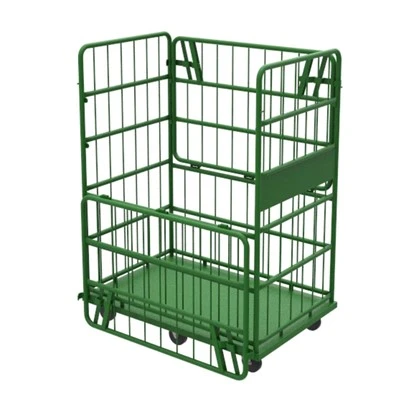
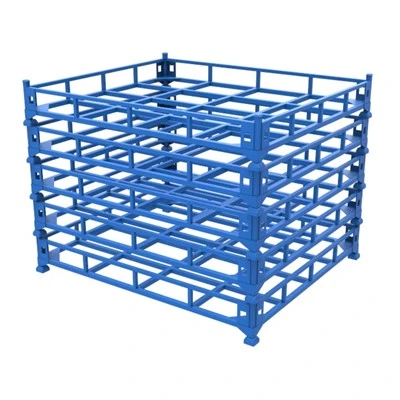
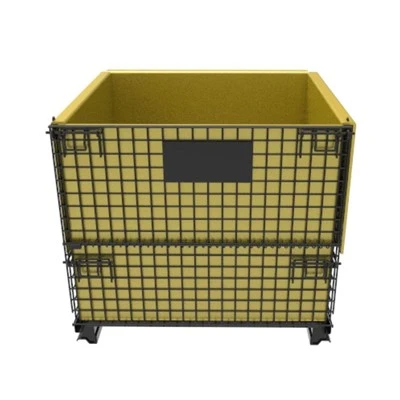
Logistics and storage solutions vary widely, with material choice impacting load capacity, durability, space efficiency, and environmental adaptation. Metal logistics boxes are renowned for their strength, capable of handling dynamic loads between 0.5–2 tons and static loads up to 5 tons, making them ideal for repeated heavy-duty transportation. Their lifespan is also long, with a potential 5–10-year recycling cycle, and they are fireproof, impact-resistant, and highly compatible with automated systems such as AGV and vertical lifts. Plastic logistics boxes offer medium strength, generally supporting 0.1–0.5 tons, and provide decent stacking efficiency, saving up to 50% of space. They are easier to handle but can deform under pressure and have moderate durability of 2–3 years. Wooden boxes are suitable for medium-duty applications but can deform or decay when exposed to moisture, with 1–2 years of service life. Disposable cardboard or paper boxes are the weakest, designed for one-time shipping or light-duty transport, with no recycling or long-term usage benefits.
When selecting a logistics box, industry professionals consider cost, environmental impact, and automation compatibility. Metal boxes have higher initial costs but are economical over repeated cycles due to longevity. Plastic boxes balance moderate durability with recyclable material usage, while wooden boxes require frequent replacement, increasing long-term costs. Cardboard solutions are inexpensive upfront but have negligible lifecycle value. Environmental adaptation is another key factor: metal boxes resist moisture, oil, and temperature changes; plastic boxes handle moderate temperature variance but are prone to aging; wood is susceptible to moisture and insects; paper is highly vulnerable to environmental damage. Each type also has implications for automation: metal boxes offer precise dimensions and stability, allowing seamless integration with automated systems, whereas plastic and wooden boxes may deform, and paper boxes cannot support automation. Choosing the right box material ensures operational efficiency, product safety, and cost-effectiveness in supply chain and storage management.