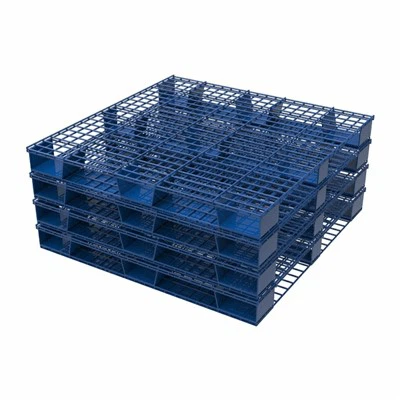
As a supplier of Heavy Duty Beam Racks, I often receive inquiries from customers about how to calculate the storage capacity of these racks. This is a crucial aspect for businesses looking to optimize their warehouse space and ensure efficient storage. In this blog, I'll guide you through the process of calculating the storage capacity of a heavy-duty beam rack.
Understanding the Basics of Heavy Duty Beam Racks
Heavy Duty Beam Racks are a popular choice for warehouses due to their high load-bearing capacity and flexibility. They consist of upright frames and horizontal beams, where pallets are placed. The design allows for easy access to each pallet, making them suitable for a wide range of products.
Before we dive into the calculation, it's important to understand some key terms:
- Pallet Size: The dimensions of the pallets that will be stored on the rack. Common pallet sizes include 48" x 40" (1219mm x 1016mm) in the United States.
- Beam Level: Each horizontal layer on the rack where pallets are placed.
- Upright Frame Spacing: The distance between the upright frames, which determines the width of the storage area.
- Load Capacity: The maximum weight that the rack can support per beam level.
Step 1: Determine the Pallet Dimensions
The first step in calculating the storage capacity is to determine the dimensions of the pallets that will be stored on the rack. Measure the length, width, and height of the pallets, including any overhang. Make sure to account for the type of products being stored and any special requirements, such as clearance for forklift access.
Step 2: Calculate the Number of Pallet Positions per Beam Level
Once you have the pallet dimensions, you can calculate the number of pallet positions per beam level. To do this, divide the length of the beam by the length of the pallet, and then divide the width of the beam by the width of the pallet. Multiply these two numbers to get the total number of pallet positions per beam level.
For example, if the beam length is 10 feet (120 inches) and the pallet length is 48 inches, and the beam width is 4 feet (48 inches) and the pallet width is 40 inches, the calculation would be as follows:
- Number of pallets along the length: 120 inches / 48 inches = 2.5 (round down to 2)
- Number of pallets along the width: 48 inches / 40 inches = 1.2 (round down to 1)
- Total number of pallet positions per beam level: 2 x 1 = 2
Step 3: Determine the Number of Beam Levels
The next step is to determine the number of beam levels on the rack. This will depend on the height of the warehouse and the height of the pallets. Make sure to leave enough clearance between the top of the pallets and the ceiling to allow for forklift operation.
To calculate the number of beam levels, divide the available height in the warehouse by the height of the pallets, plus any additional clearance. For example, if the warehouse height is 20 feet (240 inches) and the pallet height is 48 inches, and you leave 12 inches of clearance between each level, the calculation would be as follows:
- Total available height for pallets: 240 inches - (12 inches x number of levels)
- Number of levels: (240 inches - 12 inches) / (48 inches + 12 inches) = 4
Step 4: Calculate the Total Storage Capacity
Now that you have the number of pallet positions per beam level and the number of beam levels, you can calculate the total storage capacity of the rack. Multiply the number of pallet positions per beam level by the number of beam levels to get the total number of pallet positions on the rack.
Using the previous examples, the total storage capacity would be:
- Total number of pallet positions: 2 (pallets per beam level) x 4 (beam levels) = 8
Step 5: Consider the Load Capacity
In addition to the number of pallet positions, it's important to consider the load capacity of the rack. Each beam level has a maximum weight limit, which should not be exceeded to ensure the safety and stability of the rack.
Check the manufacturer's specifications for the load capacity of the rack and make sure that the total weight of the pallets on each beam level does not exceed this limit. If you need to store heavier items, you may need to choose a rack with a higher load capacity.


Other Factors to Consider
- Forklift Access: Make sure that the rack design allows for easy access by forklifts. Consider the turning radius of the forklift and the clearance required for loading and unloading pallets.
- Product Compatibility: Different products may require different storage configurations. For example, long or irregularly shaped items may require special racks or handling equipment.
- Future Expansion: If you plan to expand your warehouse or increase your storage capacity in the future, choose a rack system that can be easily modified or expanded.
Conclusion
Calculating the storage capacity of a heavy-duty beam rack is an important step in optimizing your warehouse space and ensuring efficient storage. By following the steps outlined in this blog, you can accurately determine the number of pallet positions and the total storage capacity of the rack.
If you're in the market for a Heavy Duty Beam Rack or need more information on storage solutions, we're here to help. Our team of experts can provide you with customized solutions based on your specific needs and requirements. Contact us today to discuss your project and get a free quote.
Links
References
- Warehouse Storage Systems Handbook, 2nd Edition
- Material Handling Equipment Manufacturers Association (MHEMA) Guidelines